If your laptop speakers are crackling, popping, or producing distorted sound, the problem may be caused by audio driver issues, incorrect sample rate settings, sound enhancements, high CPU usage, power management, Windows updates, or damaged speaker hardware. The noise may occur constantly or only during certain applications and playback conditions. This guide covers every cause of laptop speaker crackling and gives you a clear path to resolving each one.
Why Laptop Speakers Crackle
Crackling falls into two broad categories. Software causes include a corrupted audio driver, a sample rate mismatch between the audio device and playback software, audio enhancement effects overloading the speaker hardware, competing applications fighting for exclusive audio control, and power management settings throttling the audio chip during playback
Hardware causes include a physically damaged speaker cone, a loose internal connection, or a worn-out speaker component
Software causes are far more common and fully fixable without opening the laptop. Hardware causes require either a repair or switching to external audio permanently
Change the Audio Sample Rate and Bit Depth
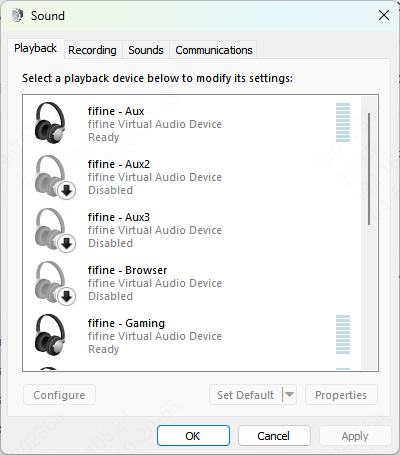
Right-click the speaker icon in the taskbar and select Sounds. Go to the Playback tab. Right-click your laptop speakers and select Properties. Go to the Advanced tab. The Default Format dropdown controls the sample rate and bit depth
Try 24-bit 48000Hz first — this is the most compatible setting for most audio hardware. Apply and test. If crackling persists, try 16-bit 44100Hz, which is the CD standard and works well on simpler audio hardware
On the same tab, uncheck Allow applications to take exclusive control of this device. This prevents situations where one application locks the audio device and causes crackling when another application tries to play audio simultaneously
Disable Audio Enhancements
Windows and laptop manufacturers apply audio enhancement effects to improve perceived sound quality — bass boost, loudness equalization, virtual surround sound, and room correction. On lower-quality laptop speakers, these effects can push the hardware beyond what it handles cleanly, producing distortion and crackling in the processed output.
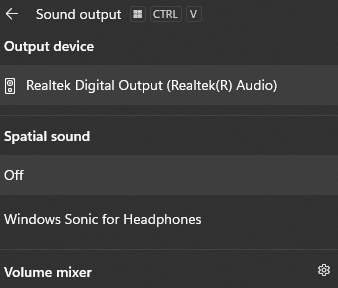
Right-click the speaker icon and select Sounds. Go to the Playback tab. Right-click your speakers and select Properties. Click the Enhancements tab and check Disable all enhancements. Apply the change. Go to the Spatial sound tab and set it to Off if it is currently enabled
If your laptop has Dolby Atmos, DTS Sound Unbound, Nahimic, or similar OEM audio software, open that application separately and disable all processing effects temporarily. If the crackling stops when you disable the enhancement software, the effects are overloading the speakers. You can re-enable individual effects one at a time to find the specific one causing the problem
Update Audio Driver
The audio driver controls how Windows processes and delivers audio to the speakers. A corrupted or outdated driver — which occurs frequently after Windows feature updates that silently replace OEM audio drivers with generic versions — is the most common cause of crackling on laptops.
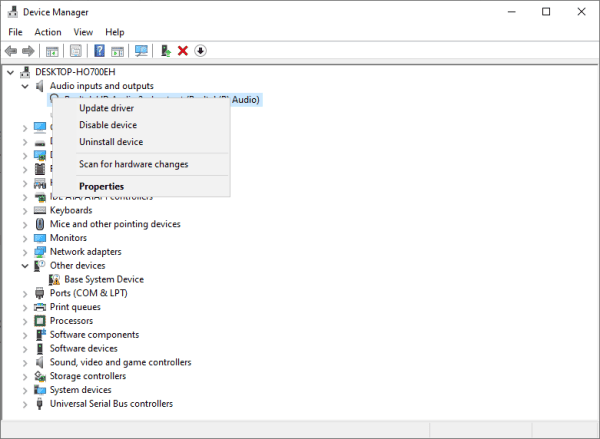
Manual method: press Win + X and open Device Manager. Expand Sound, video and game controllers. Right-click your audio device and select Update audio driver
Choose Search automatically for drivers. If Windows finds and installs an updated driver, restart and test
For a full reinstall, right-click the audio device and select Uninstall device. Restart the PC. Windows reinstalls a basic audio driver automatically, which may resolve the crackling immediately
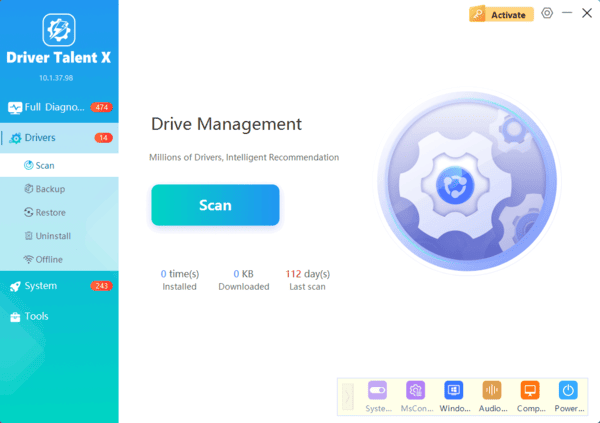
If it doesn't, or if Windows installs a generic driver that doesn't fully support your laptop's audio hardware, use Driver Talent X
Driver Talent X identifies your exact audio chip by hardware ID and installs the correct matched driver version — including OEM-specific variants that Windows Update doesn't provide. After restarting, the crackling caused by a driver mismatch will be gone.
Adjust Power Management for the Audio Device
Windows power management can reduce power to audio hardware during periods of low activity. When audio playback resumes after a brief idle period, the hardware has to ramp back up to full power, and the transition sometimes produces crackling. This is particularly noticeable on battery power.
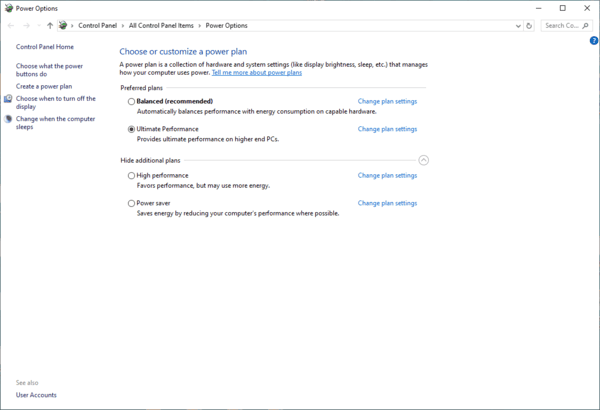
Open the Control Panel and go to Power Options. Click Change plan settings next to your active plan, then click Change advanced power settings
Expand Multimedia settings. Set both When sharing media and When playing video to Prevent idling to sleep. Apply the changes
If the laptop is on battery when crackling occurs, switch to the Balanced or High Performance power plan and test. Battery Saver mode aggressively throttles hardware components including audio and is a common source of crackling on laptops not plugged in
Check CPU Load During Playback
Audio buffer underruns occur when the CPU is too busy processing other tasks to feed audio data to the speaker hardware on time. The gap in the data stream produces crackling or a stuttering pattern that follows the rhythm of whatever is loading the CPU.
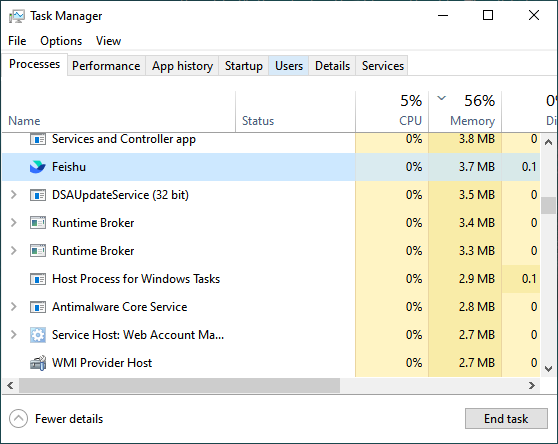
Press Ctrl + Shift + Esc to open Task Manager. Keep it visible while playing the audio that produces crackling. Watch the CPU column. If CPU usage is consistently above 80 to 90 percent during playback, overload is te cause. Close background applications — browsers with many tabs, file sync services, antivirus scans — and test again
If a specific application is consuming excessive CPU and causing crackling during audio, go to the Details tab in Task Manager, right-click that process, select Set priority, and choose Below Normal. This reduces its competition for CPU cycles during audio playback without closing it entirely
If the laptop runs hot during the crackling episodes, thermal throttling may be the actual cause. The CPU slows itself down when overheating, which creates the same buffer underrun effect. Ensure the laptop is on a hard flat surface, clear the vents of dust, and test with the laptop plugged in and on a cooling pad if available.
Check for Windows Updates
Windows updates occasionally include fixes for audio subsystem components that address crackling and distortion introduced by earlier updates. If crackling appeared immediately after a Windows feature update, a patch addressing the issue may already be available
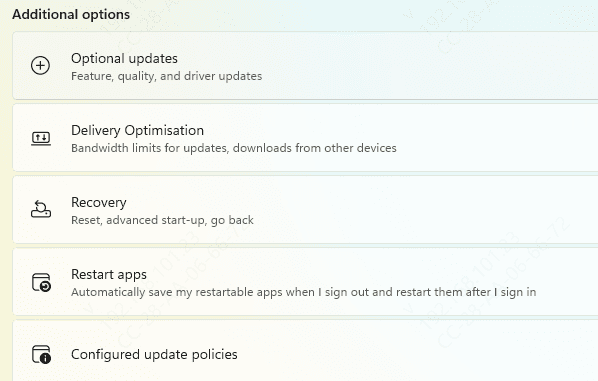
Go to Settings, then Windows Update, and click Check for Updates. Install all available updates and restart. After the restart, test the audio. If the crackling was caused by a known audio regression in a Windows update, this may resolve it without any further steps
Test with Headphones or External Speakers
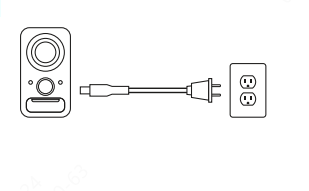
This is the most important diagnostic step in the entire guide. Plug headphones or external speakers into the audio jack and play the same audio that was crackling through the built-in speakers.
If the crackling disappears on external output, the built-in speakers have a physical problem. A loose internal connection, a damaged speaker cone, or a worn-out speaker component is producing the crackling
Software fixes will not help. Options are professional laptop speaker replacement, or using external speakers or Bluetooth audio as a permanent alternative
Reinstall OEM Audio Software
Visit your laptop manufacturer's support page and search for your exact model. Download the full audio driver and software package — not just the Realtek driver from Realtek's website
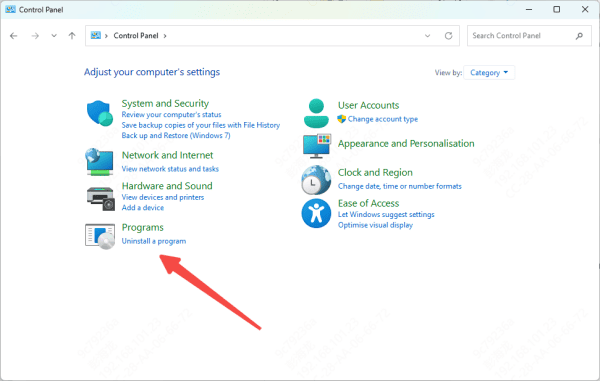
But the version provided by your laptop manufacturer, which includes the tuning profile for your specific speaker configuration. Uninstall all existing audio software through Settings and Apps first, restart, then install the full OEM package
This fix is particularly relevant for Dell, HP, Lenovo, and ASUS laptops, which ship with custom audio profiles that the generic Realtek driver doesn't include
Conclusion
Software causes account for the vast majority of laptop speaker crackling. The audio driver, sample rate settings, and enhancement effects are the most common culprits, and they're all fixable in minutes.