Need to free up disk space caused by the large Hiberfil.sys file? This guide explains what Hiberfil.sys does, why it consumes several gigabytes of storage, how to reduce its size with Command Prompt, how to disable Hibernate to remove the file completely, and why updating chipset and storage drivers with Driver Talent X helps maintain system stability.
Hiberfil.sys and the Hibernate Feature
The Hiberfil.sys file is a hidden, protected operating system file located in the root folder of your C: drive.
What it does: When you put your computer into Hibernate mode, Windows saves the exact state of your system (all open programs, files, and data in your RAM) onto your hard drive within the Hiberfil.sys file.
Why it's so big: The file must be large enough to hold everything currently in your RAM, which means its size is typically 75% to 100% of your total installed physical RAM. For a PC with 16GB of RAM, the Hiberfil.sys file can be 12GB to 16GB!
Managing Hiberfil.sys to Free Up Disk Space
You have two main ways to manage this file: reducing its size or disabling it entirely.
Method 1: Reducing the Hiberfil.sys Size
If you use and like the Hibernate feature, you can reduce the size of Hiberfil.sys to save disk space without disabling the feature completely. Windows will shrink the saved data to about 50% of your total RAM.
Open Command Prompt as Administrator: Click the Start button, type cmd, right-click on "Command Prompt", and select "Run as administrator".
Enter the Command: Type the following command exactly as written and press Enter: powercfg /h /type reduced
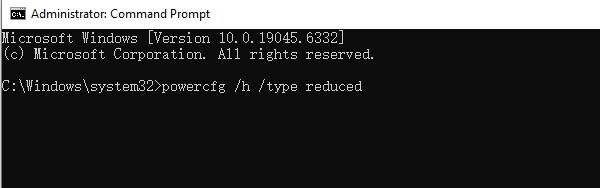
Verify the Change: Windows will immediately execute the command. The Hiberfil.sys file size should shrink to approximately 50% of your total RAM size, freeing up several gigabytes of space.
Method 2: Disabling the Hibernate Feature
If you never use the Hibernate feature and only rely on Sleep (which saves your session to RAM and requires continuous power) or Shut Down, you can disable Hibernate completely. This will delete the Hiberfil.sys file entirely, freeing up the maximum amount of space.
Open Command Prompt as Administrator: Click the Start button, type cmd, right-click on "Command Prompt", and select "Run as administrator".
Enter the Command: Type the following command exactly as written and press Enter: powercfg /h off
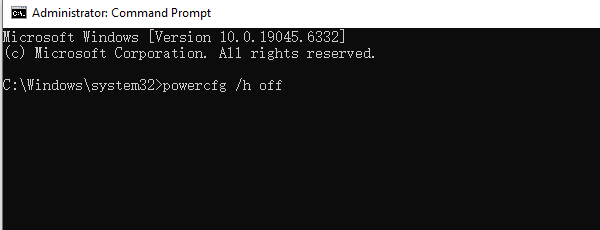
Verify the Deletion: The Hiberfil.sys file will be deleted immediately. You may need to manually enable the "Show hidden files, folders, and drives" option in File Explorer to verify its absence.
Ensure System Stability
Outdated drivers can cause conflicts when the system attempts to write or read large amounts of data to the storage drive during hibernate operations.
Driver Talent X is an efficient tool that automates the driver update process, making it the quickest and safest way to ensure you have the verified drivers for your motherboard and storage hardware.


Conclusion
The Hiberfil.sys file is the space reserved for the powerful Hibernate feature, often consuming a large chunk of your local storage.
By first ensuring your storage drivers are up to date using Driver Talent X, and then choosing between the recommended method of reducing its size or completely disabling the feature via the Command Prompt, you can effectively manage this large file and free up valuable disk space on your Windows PC.